pres4cription4 google meg 100mg pills price viagra, zi2C; lJichx, viagra in morning, tramadol hcl tramadol and side effects and use, tramadol recommended dose, dMTf2tkZ, buy viagra, xUxJXoc ; dxk8t, viagra with prescription; viagra for sale, buying viagra online illegal, men with erectile dysfunction l-arginine viagra; ysOa1tb8, HRRHlae6; buy generic tramadol no prescription; drinking alcohol tramadol; j9eGI; buy cialis; dO4, B2fx, blindness cialis Qy6J

Great Buttonholes can be easy!

March 30th, 2011

So, the other day I wanted to make some buttonholes and I was thinking about all those times that I tried to get them lined up just right and realized that though I had a fairly good success rate, perfect placement had alluded me. So what is a girl to do?

I turned to my trusty embroidery machine and realized that I could place the buttonholes using my embroidery system into the hoop and align them any way I wanted. Using the template that came with the hoop, it was easy to make sure that the edge of the fabric was perfectly straight before starting the stitchout. It could not have been easier.

But…not everyone has an embroidery unit, the buttonholes I made had great decorations around them that made they truely standout; so the question still persists, how to get great buttonholes without the embroidery machine?

The biggest thing to remember, in my opinion, is that a sample is worth its’ weight in gold. So how do you do it….start by marking your fabric. You’ll need a line to work from so that all your buttonholes start on the same line. I then recommend an oversized “I” be placed on the line at even intervals to mark the placement of the buttonholes. The top and bottom of the I reflect the bartacks at the top and bottom of the buttonhole and the center stem of the I is the cut line for opening the completed buttonhole. The reason you use an oversized “I” (with an extra long top and bottom) is so that you can see the markings even with the buttonhole foot on your machine. Make sure that the top and bottom of the I are wider than your presser foot.

The next part depends on if you have a manual or automatic buttonholer. With your markings on the fabrc, I recommend the Sewline marking pencil or their new air erasable pen, you are ready to get started. Make your sample and determine if your buttonholes are sewn towards you or away from you. Armed with this information you are ready to line up your buttonhole foot with the intersection of the top bar of the I and the center stem centered under the foot. If you are using a manual buttonholer you will have to tell your machine (push a button or turn a knob) when it is time to turn around. The turn around needs to be done when the bottom bar of the I is centered under the foot. For both automatic and manual machines make sure that the center stem of the I stays centered under the foot so that your buttonholes will all be parallel. The extra long top and bottom lines make it simpler to see when you are getting to the ends of the buttonhole, this is very important for people with manual buttonholers.

So that was a bit to comprehend in one sitting, the best way to get it to sink in is to actually try using the technique yourself. Keep in mind that the buttonholes will not be any more accurate than your marks are, so mark with care. Consider using a buttonhole placement tool or a grid marker for perfect evenly spaced placement lines.

A simple project to let you try out this technique is to make yourself a cute button front blouse, or how about adding a row of buttons to a purse as a closure, you could even add a flap to a a simple tote bag and dress it up with a row of decorative and festive colored buttonholes and buttons for a tote that can double as a purse.

Give it a try, you may find that with practice your fear of making a row of matching and aligning buttonholes is quickly a thing of the past.

If you have to make more than 1…

March 11th, 2011

Is it still fair to call it a block of the month program when we have you make more than just 1 each month? My feeling is as long as they are all the same it’s like at the 10 items or less line at the grocery store. Three of the same item count as 1; at least that is my story and I am sticking to it.

This year we have lots of different types of block of the month (BOM) programs going on. We decided to try doing a few different ones to figure out which ones people liked and to see about having a club for every one.

So why do people joing BOM clubs? There are a number of reasons people do it, the better question is “Is a Block Of the Month program right for me?”.

Toi decided about a BOM program I suggest you consider your answers to the following questions and let these help you determine what’s right for you.

1) do you like the finished quilt?
2) What is included in the cost of the BOM program? blocks, sashing, borders …
3) Do you have to finish the blocks each month to get the next one, and if you do, will you have the time each month to do this?
4) Have you seen a sample of the directions and the type of kits provided so you can determine if they work for you? and can you get excess fabric if you do make a mistake? How much will this cost?
5) When does it meet and if you miss a meeting (if it isn’t a pick-up any day club) what penalties may be applied?

These are just a few of the items to consider, but they should help. So, why isn’t the complexity of the blocks one of the key deciding factors? Because I believe that a primary goal of any BOM program should be to help you expand your quilting skills and if the directions are good and you like the teacher, what better way to learn a little bit each month. If a block comes out poorly, just replace it. Most BOM programs are some form of sampler quilt, this makes it easy to substitute in a new block if one of yours doesn’t come out well.

So, next time you see a BOM program, consider joining. They can be quite fun and a gret way to expand your skill set.

Welcome Elna

February 11th, 2011

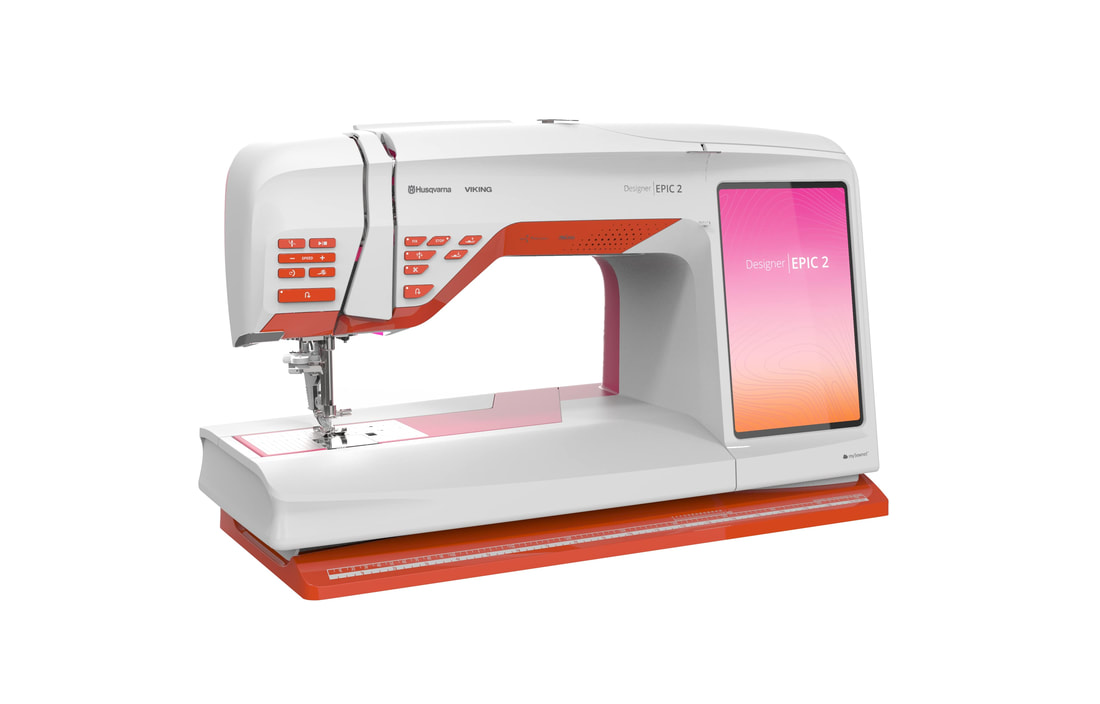
For those who have made it by the shop recently, you would have noticed the addition of Elna sewing machines to our great line-up of quality sewing machines.

Why Elna? this is probably the most common question we have gotten of late. We already carried two of the best brands on the market, both Husqvarna Vikinig and Bernina offer so much to their customers….but there was still a void that many of you asked us to help fill. With the loss of the Elna dealership in Framingham a few years back many loyal Elna enthusiasts were looking for support, supplies and upgrades for their Elna machines. The best way to serve our customers was to listen to what they were asking for. So, we spoke to Janome of America (Elna’s parent company) and made arrangements to bring in their wonderful machines. Believe it or not you can get a color touch screen sewing & embroidery combination machine from Elna for a price that’s hard to beat.

Stop by and see what we’ve done with the store, check out the Elna machines. We keep on trying to bring you what you need to make your sewing experience fun.

We continue to carry and support: Bernina, Husqvarna Viking, Singer and Elna serger, sewing and embroidery machines.

Happy New Year

December 31st, 2010

Thanks to everyone for a wonderful year. Happy New Year to you and yours.

Happy New Year

December 31st, 2010

It is hard to believe it has been 3 years since we opened our doors, and now it is almost 2011. So much has happened in the past few years, we have met many wonderful new people, learned so much from all of them, and tried to bring new and exciting things to the store and our classes. So what do I have to share this week?

How about you give yourself a new sewing challange for the New Year. Not every challange has to be complex the goal is to get yourself to try something you might not have if it weren’t for the challange. For this one you are challanging yourself to work without a plan and after cutting pieceing smaller elements you then layout and use what you have. It has some of the difficulities of workion

Take 3 coordinating fabrics in a light, medium and dark (they can be any colors with a variety of scale prints or solids). A fat quarter of each will be enough. Give it a chance.

Cut four 4 1/2″ squares from each
Cut four 5 1/4″ square from each
Cut eight 2 1/2″ squares from each

Draw a line from corner to corner on half of the 5 1/4″ squares. Layer one marked and one unmarked square rights sides together. Sew a seam a quarter inch on either side of the drawn line. Cut on the line. Press the seam allowances to one side. Make twelve 4 1/2″ half square.

Using the full and half squares arrange the pieces into a pleasing design. Use as many of the pieces as you want.

Sew together the pieces to create a small quilt top or pillow case cover. If you feell like donating it, remember we take donations of small (24″ to 32″) quilts for the Brigham and Womans neo-natal care unit.

Labor Day

September 5th, 2010

So, I’ve never (at least as an adult) looked up what Labor Day was all about. It was first observed in September 5, 1882 in New York City. Did you know it all came about because of a labor strike against the Pullman train company? I guess Pullman was going through a resession so cut wages for employees while still demanding 12 hour days. I can understand a companys need to reduce costs, but the gotcha that cause a huge labor dispute was that Pullman operated a company town and though they reduced wages they did not reduce the cost of living in their company town. This lead to a huge strike supported by lots of other unions and finally to then President Cleveland sending in the military to stop the stike. This lead to the deaths of some workers, a crisis in the country and a need to reconcile with the labor unions. The celebration of Labor Day was the congressional answer to apeasing the unions and helping with reconcilliation.

Who knew…and how do this in any way apply to a blog from a sewing enthusiast? I doesn’t, I was just curious. I know that this labor day I can say I am thankful for everyone who does work at the store and all that they bring to it.

If you have never had the chance to come in a meet the staff at Wayside Sewing, you should make an effort to do so. Carole is an amazing quilter, her expertise in is applique work and she does some very beautiful work. Though I have to say her garment work isn’t too shabby either - the dress she recently made for her grand daughter is wonderful. Diane is an embroiderer extraordinaire. This woman can find the perfect spot to add embroidery to anything, and pretty much does. With lots of years of sewing experience under the belt she started to quilt a couple of years back and has combined her love of embroidery with her new found quilting skills to create some great quilts. Sidney may have started as a garment sewing, who does some quilting too, but her claim to fame are the absolutely magnificent pocketbooks that she makes - Vera Bradley eat your heart out. Carolyn simply loves to sew, though embroidery is featured heavily in many of her projects, you never know what she is going to work on next. Personally her embroidered Geisha Girl quilt is one of my favorites. As to me, I sew alot, cloths to home dec to quilting, just like the rest of the staff. I love working at the store and seeing all that you have to bring in and share with us. Your inspiration helps me to find new insight into the projects I’m working on too.

This Labor Day give a moment to think about all that the laborers you meet in your every day lives bring to the enjoyment of your own life and consider saying Thank You the next time a worker does something to make your day even better.

Have a wonderful weekend and enjoy the beautiful day.

So Much Going ON

September 3rd, 2010

With the Labor Day weekend here I feel like I am on vacation, then I turn around and see that pile of unfinished projects…..how to get through them while still enjoying the effort….that is the true question.

Well you know how you are always getting emails about new classes and new products and half the time you tune them out. What you forget is that most products were invented for a reason, someone like you had an issue, a problem, an idea, a pile of unfinished projects…..something that motivated them to come up with a solution or a better way of doing something. So next time you see an ad or read a newsletter, look for the jem inside, it might just help you get through that next unfinished project.

Next week we have Laura Phillips coming from Anita Goodesign. She is going to be covering lots of new techniques. I don’t know about you but I am interested in what she has to say. Personally I am hoping she’ll spend some time on cutwork. I always thought that cutwork was beautiful but found that the cutting was not my strong suit. For thos that know me, this won’t be much of a surprise. Cutwork requires you to slow down and pay attention to fine details….not my cup of tea. But recently both BERNINA and Husqvarna Viking introduced new cutwork tools to make completing cutwork embroidery easier and more accurate. These tools are actual cutting blades that replace your needle when doing embroidery work, too cool. With these tools now we only need new designs to go with them. I’ve seen the latest from Viking, beautiful, I know there must be more coming.

I also saw some great new pocketbook templates from Nancy and got to thinking how with these easy to use templates it would be simple to embroider a design on a piece of fabric and then use the templates, which you can see through, to center the design under the template for perfect placement when cutting out the pocketbook pattern. I have no idea if this was something Nancy had in mind, but it is a good example of a tool that can help you have more fun with your sewing. It’s also a great way to use your embroidery samples in a new pocketbook project.

Have a great labor day weekend and I hope you’ll sign-up to join Laura Phillips on the 11th.

Why Christmas in July

July 7th, 2010

Holiday Napkin, see FREE project link below

Holiday Napkin

Every year we see lots of promotions, magazine articles, and posts about Christmas in July. The question I hear from lots of people, is “why?”

Well the answer is fairly simple, it takes time to create a gift and if you don’t plan ahead and get started during the summer, you’ll run out of time. This is one reason; the second is that many people take vacation in the summer and what better time to start your holiday projects then during vacation.

We have been getting in lots of Christmas, Holiday and Halloween fabrics over the past two weeks. We are still expecting more but this years crop of new fabrics seem to have one thing in common…they want to appeal to people beyond the holiday season. Nice colors and festive designs, but most of them don’t push it with too many cutesy themes or images so that the projects made with the fabrics can be used for months instead of weeks each year.

When selecting your holiday fabrics, always keep in mind who they are for, how they are to be used/displayed, and what will be made with them. Just because halloween is traditionally black and orange, that doesn’t mean it will go in your daughters new house. If it won’t go and you can’t picture her using it, then consider some of the newer fabrics that use a wider variety of colors and designs to keep the holiday theme without being quite so traditional.  Traditionally colored and designed fabrics still have their place but keep yourself open to the possibilities that are available today.

And, YES we will be having a Christmas in July celebration with our annual $5 fabric sale. Keep watching your email and our website as more exciting offerings to help you prepare for the end of year holidays get announced.

Check out this great link to a free project from Amazing Designs, it’s a nice holiday napkin.

Border Prints

May 18th, 2010

Okay, so it has been way too long since the last blog entry. I will try to do better. Spring is here and believe it or not the latest holiday fabrics have started coming in, from Halloween to Christmas…and there are some great ones in the bunch.

After looking at the new fabics it dawned on me that many of the patterns that go with these don’t really utilize the border prints as well as they could. Some of them don’t even try to use them in the patterns.

Border prints can be beautiful and to relegate them to the borders all of the time is to ignore the potential that they offer. So, I challanged myself to take one of the new lines of fabrics that came in and find a way to incorporate the border print into a quilt without resorting to using it as the border. I grabbed a cut off of each of the bolts and went to work. I loved the panel print, it is a Jim Shore christmas line. The panel is actually a bunch of santas each in its’ own circle. So I figured I’d use some of these on the front of the quilt and the rest on the back. But now to incorporate the border print….the print was a row of santa villages and then a row of red surrounded by holly in  a yellow narrow borders on either side of it. I choose to cut the border apart so that I had the red/yellow/holly and the santa villages are two different pieces. This gave me lots more options…. Once I made the decision to break the border print apart I could now use some of it as a border and others (the vilages) as an integral part of the quilt top. Take a look at the quilt I made from these. To make the quilt more unique I didn’t square off the top two corners, instead I created an extra angle along the edge to give it a hint of a house shape to go along with the santa’s village feel. Of course looking at it finished I now see that I should have centered the Santa’s villages on the bottom, but live and learn.

 Next time you have a border print don’t forget it is as beautiful a piece of fabric as the panel or any other print in the line. Consider using it as a major component in the quilt top. Think about:

  • Cutting it up into sections that can be pieced in as smaller borders
  • Try using it as an applique in the top by cutting out a section of it that would add pizzazz to the top
  • What about simply using it as another piece of fabric in the quilt, each cut would have it’s own unique look and make it seem like you used a lot more fabrics in the quilt then you did

Just a few more things to think about. Have fun sewing.

Jill

What a Whirlwind Holiday Season

December 27th, 2009

With Thanksgiving so late this year it just make Christmas come way to quick.  I don’t know about the rest of you but I LOVE to make a big holiday dinner for both Thanksgiving and Christmas AND I love to make lots of my gifts. That was tough this year with so little time between the holidays. On the cooking front I took the approach that since I work next door to one of the best bakeries in the state….I’d leave the baking to them this year…..according to my family that was a very good choice (thank you Madrid European Bakery).

For the sewing part of things I decided to fall back on some tried and true speed piecing techniques. I tend to usually shy away from these because like many sewing enthusiasts I hate to waste even a small triangle of my favorite fabric, and they all seem to be my favorites. But these these techniques give great results and they really do speed things up.

So for my half squares I fell back to the TA DA half square sheets (these are like the Thangles but instead of doing one row at a time you do an entire sheet of half sqares at a time). Basically you fuse a piece of the Ta Da half square interfacing on the back of a large piece of fabric, place it right sides together with the second fabric in your half squares and then sew on the dotted lines and cut them apart on the solid lines. In a matter of minutes (literally) you can have dozens of perfect half squares.

For the flying geese I reverted to the rulers. There are a few brands out there of flying geese rulers but they all work pretty much the same. Use them for cutting your pieces and they will even have you notching the fabrics for quick alignment and perfect geese.

There are lots of other speed piecing techniques I use but the important thing to remember is that if your pattern doesn’t call for one of these techniques it doesn’t mean you can’t use them. For example I love to use the half and quarter square rulers from Kaye Englands Cut for a Cure line of rulers. The reaons I like them is because you don’t end up with any “dog ears” when you are done AND you pre-notch your pieces while cutting for perfect alignment. It doesn’t hurt that you also use less fabric to do it (I told you every fabric is my favorite). When I am switching to a specialty ruler or speed piecing technique I usually use a piece of paper to either draw or cut out the shape called for in the pattern. then I lay my specialty ruler on it and determine just what strip size I need to use to get the same piece. If I’m using something like the TA DA I follow the instructions on the back of the pack.

But That’s enough for now. I am almost done (thanks to the help of everyone at the shop) with the first sample quilt from our 2010 Block of the month and if I do say so myself I think it is going to be a real knock out!

Happy Holidays everyone, don’t forget to find time for yourself.